Tune in to our podcast series: The Dental Board Room
Listen Now

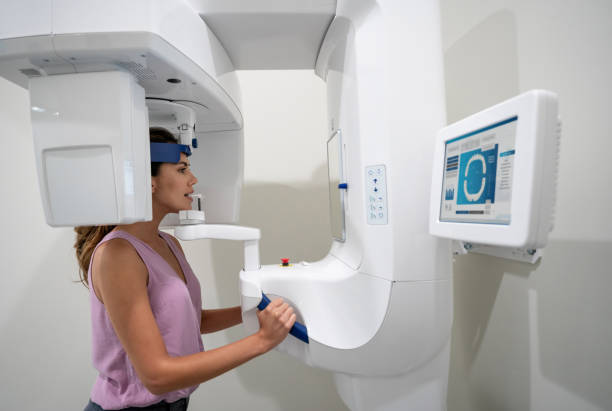
You probably know a dentist who bought a cone beam CT scanner and barely uses it.
Maybe you are that dentist.
The machine sits in a room, underutilized. You know the image quality is there. You know the clinical applications are real. But somewhere between the delivery day excitement and the reality of Monday morning, the workflow never fully came together, the team never got fully trained, and the fear of liability for reading a complex image made the whole thing feel more burden than asset.
The CBCT is just one example. The same story plays out with milling machines, lasers, digital impression systems, and a long list of other technology purchases that looked like investments on paper and turned out to be expensive furniture.
This isn't a clinical problem. It's a capital allocation problem — and it has a solution.
Before getting into the framework, it's worth making the math visceral.
A cone beam CT scanner runs between $70,000 and $120,000. Let's use $70,000 as the conservative number.
At a 10% average annual compound return — roughly what a well-diversified index fund has historically delivered over long periods — $70,000 invested at age 40 becomes approximately $470,000 by age 65. That's the opportunity cost of a machine that doesn't earn its keep. Not what you paid. What you gave up.
"What would that $70,000 do over a 20-year period at a 10% compound growth rate?" asks Wes, host of the Dental Boardroom podcast. The room goes quiet when the number lands.
This isn't an argument against ever buying equipment. It's an argument for treating every equipment purchase with the same analytical discipline you'd apply to any other capital allocation decision — because that's exactly what it is.
There's a concept floating around the internet called "girl math" — the tongue-in-cheek practice of rationalizing a purchase by reframing the cost. Divide a luxury bag's price by the number of times you'll use it, and suddenly it's practically free. Buy it now before it gets more expensive and you've basically saved money.
It's funny when applied to handbags. It's less funny when applied to a $100,000 piece of clinical equipment.
"I think that's how we all think when we want to buy a milling machine," says Michael Anderson, founder of Wonderous dental marketing agency. "I can do this procedure, and this procedure, and charge this much, and the machine pays for itself in six months."
The problem isn't the optimism. The problem is that most dentists never audit the projection afterward.
"How many people are auditing themselves?" asks Michael. "If you get that CBCT machine, don't you think you should set up a system — say, 'If I need to place this many implants to break even, I'm going to track that.' That's a really important mechanism for investment in business: knowing what you need to do to justify it, and then actually checking."
When the audit never happens, the machine becomes a sunk cost that's emotionally difficult to confront. So it gets rationalized. The story becomes that it's building clinical capability, or that future cases will use it more, or that the practice is better positioned for growth. None of those stories are measurable. None of them connect to an actual ROI.
Here's a truth that practice management consultants see over and over: equipment doesn't fix operational problems. It amplifies whatever already exists.
A practice with great systems, a trained team, clear workflows, and strong case acceptance will likely use a new piece of technology productively. The machine plugs into a machine that already works.
A practice with unclear roles, undertrained staff, inconsistent case presentation, and a doctor who is already the bottleneck for every decision will almost certainly underutilize it. The machine arrives, the workflow never gets built, and six months later it's collecting dust — while the original operational problems are still running in the background.
"Most dentists turn to equipment — they think equipment or a new procedure is going to solve the revenue issue," says Megan Shelton, founder of Shelton Solutions and a fractional COO for dental practices. "And it's not. It's going to amplify whatever leaks they already have."
She's seen practices invest $70,000 to $120,000 in cone beam technology while operating in fear of the liability that comes with reading the image — because they haven't invested in the training that would make them comfortable and competent. The equipment exists. The confidence to use it doesn't.
"Wait — you spent $70,000 to $120,000 on a piece of equipment that you are fearful to use, yet you're not investing in training?" says Megan.
The sequence is backwards. And the cost of getting the sequence wrong is not just the machine — it's every procedure that doesn't get done, every referral that gets sent out, every month the capital sits dormant when it could have been compounding somewhere else.
The antidote to equipment trap thinking is a readiness test — three questions that must be answered before any significant capital outlay goes forward.
1. Clarity: Do you know what success looks like, and who owns it?
If the machine arrives on Monday, who is responsible for integrating it into the schedule? Who owns the workflow? What does a successful outcome look like six months from now — and is that number written down somewhere?
"If I were to put $200,000 toward a CEREC system, who's going to take it over?" asks Megan. "Is that going to fall on me on the Monday it gets delivered? Because if it is, that is not a productive investment. You need to have the system below it."
If the answer is "the doctor figures it out when it arrives," the readiness test has failed at step one.
2. Leadership: Is there someone other than the owner who can ensure this investment performs?
A new capability only produces ROI if someone is accountable for driving its utilization. In most practices, that accountability defaults to the doctor — who is already the production bottleneck. Adding a new technology to the doctor's plate without a team member who owns its adoption is a formula for underutilization.
"Is there someone other than the owner who can ensure this investment will work?" asks Megan. The question isn't whether the doctor understands the technology. It's whether someone else can carry the operational weight of integrating it without requiring constant doctor involvement.
If the answer is no, the $70,000 is better allocated toward developing that leadership layer first. A capable team lead who can drive protocol adoption will generate far more long-term ROI than a machine that never reaches capacity.
3. Workflow: Has the process been mapped before the purchase is made?
Equipment integration isn't just a technology decision — it's a workflow redesign. Patient consent processes, imaging protocols, case presentation adjustments, billing and coding changes, staff training timelines, and accountability metrics all need to be thought through before the capital is committed.
"It's not as simple as writing a check or swiping your Amex — that would be way too easy," says Megan. "Whether it's coaching, equipment, or marketing — do we have the workflow? Have we thought through what that workflow is going to be?"
If the workflow isn't mapped before the purchase, the odds of a smooth integration drop sharply. The first few cases will be rocky. The team will feel under-prepared. The doctor will be pulled in to troubleshoot constantly. And the machine will carry a "we're still figuring it out" asterisk that delays productive use for months.
Beyond the readiness test, there's a simple financial benchmark worth applying to any capital allocation decision.
A healthy return target for practice investment is 3X. If you're spending $30,000 on marketing, you should have a clear and credible path to $90,000 in resulting production. If you're spending $70,000 on imaging technology, you should be able to map out how the additional clinical capability translates to $210,000 in revenue you couldn't have generated otherwise.
"If you can get 3X on every dollar you spend, that's going to be healthy," says Megan.
The 3X rule isn't a guarantee — it's a filter. If you can't tell a credible story for how an investment triples, it probably shouldn't be the priority use of that capital right now. Not because it's a bad idea in principle, but because there's likely a higher-returning bottleneck somewhere else in the practice that should be addressed first.
It would be easy to read this as a critique of equipment spending and assume that marketing is different. It isn't.
"When you invest money in marketing, you have to be able to measure the ROI," says Michael Anderson. "At a basic level — you give me $30,000, I need to be accountable for saying you spent $30,000 and we made $70,000. Or $10,000. Whatever it is — so we know what the ROI is."
The same audit that most dentists never run on their cone beam scanner is the same audit most dentists never run on their marketing spend. If you're writing a monthly check to a marketing agency and you can't tell a visitor to your practice what your patient acquisition cost is, what your lead conversion rate is, or whether your new patient volume changed since you started — you have an ROI visibility problem.
"How many of you are doing marketing right now and have any idea what your ROI is?" asks Michael. "If you're sitting there saying 'I don't know' — that's a problem. It's time to go ask that company: are we tracking this? How do I know?"
The answer to an untracked marketing spend isn't necessarily to stop spending. It's to build the measurement infrastructure so the money can be either justified or redirected to something that performs better.
None of this means dental technology is a bad investment. Done right — with a readiness test passed, a 3X ROI path mapped, a workflow designed in advance, and an accountability owner identified — new clinical capability can be transformative for a practice.
But there's a sequencing discipline that most practices skip. Megan has worked with practices that improved their operating income by over 60% year over year without major equipment purchases. The lever wasn't technology. It was operational clarity — defined roles, measurable outcomes, trained leadership, and a team that could execute without the doctor in the room for every decision.
When that foundation is in place, new capital deployed into equipment or marketing or additional services lands on solid ground and compounds. When it isn't, the same capital disappears into the noise of a practice that hasn't yet solved its core operational constraints.
Build the system first. Then buy the machine.
That order isn't a slower path to clinical excellence or practice growth. It's the only one with a reliable return.
Listen to Episode 156 of The Dental Boardroom Podcast: https://podcasts.apple.com/us/podcast/156-build-the-practice-or-build-the-life/id1518344747?i=1000765680109



Wes knows what's best for dental practices. He's been doing this for a long time and he sees lots of practices. He can tell me how our practice is doing, and what we can do to increase our productivity. With past CPA's, there were no ideas. It was all coming from me, saying "I think I can do better, but I don't know how." I come in to meet with Wes and he says "You CAN do better, and I know how."
PracticeCFO is in hundreds of dental offices around the country. They know what numbers should look like. They know what percentages of payroll, rent and supplies should be, and they will hold you accountable to those numbers, which will really help you stick to your plan and your path of growth and savings. That is invaluable
Whenever something comes up, whether it's building or practice related and we weren't sure where the numbers would go, PracticeCFO has been instrumental in helping us figure that out. I can't say enough of how important that is - that it goes beyond that initial partnership. They make sure this business marriage works.
When I go home from work, I don't spend a whole lot of time stressing about what my books look like, or how much I owe in taxes. By using PracticeCFO, the burden of keeping track of a lot of the big financial numbers and metrics are taken off my plate.
PracticeCFO helped me develop a plan for the future. I have colleagues that work with other accountants that don't have a plan - they just look at the numbers of the practice and that's it. There's no plan for 10, 20 years from now. But with PracticeCFO, you get that. PracticeCFO makes you feel like you're they're only client.
(In reference to his practice sale) What could've been super stressful, wasn't! When picking John and Wes, it was from word of mouth recommendations and other people's experiences from the past that really did it for me. And it turns out that those recommendations were right on the line.
Wes knows the business side of dentistry. His comprehensive plan will organize your personal and professional finances so you can focus on taking care of patients. Massive ROI.
I can’t say enough good things about everyone at PracticeCFO. Everyone on the team is professional, organized, knowledgeable, helpful and kind. They also respond to emails and phone calls immediately and are always happy to help. They have helped me navigate year-to-year as a business owner. PracticeCFO gives me peace of mind that my business is in good hands.
I love Practice CFO! They have helped me obtain a practice and maintain a practice. They are incredible people who are on top of everything and make owning and running the business portion of a practice easy. They couldn’t be better for my business and my sanity. They have every detail of the business and taxes taken care of where all I have to do is show up and follow their easy steps to success!
Practice CFO has the best tools I’ve seen for personal tax and financial planning in addition to top-tier corporate tax and accounting services. I have been very pleased with the level of quality service. They manage my monthly bookkeeping and accounts payable. It is a great system and saves me a ton of time, and it allows us to have monthly financial statements within a week of month end.

This will close in 0 seconds